
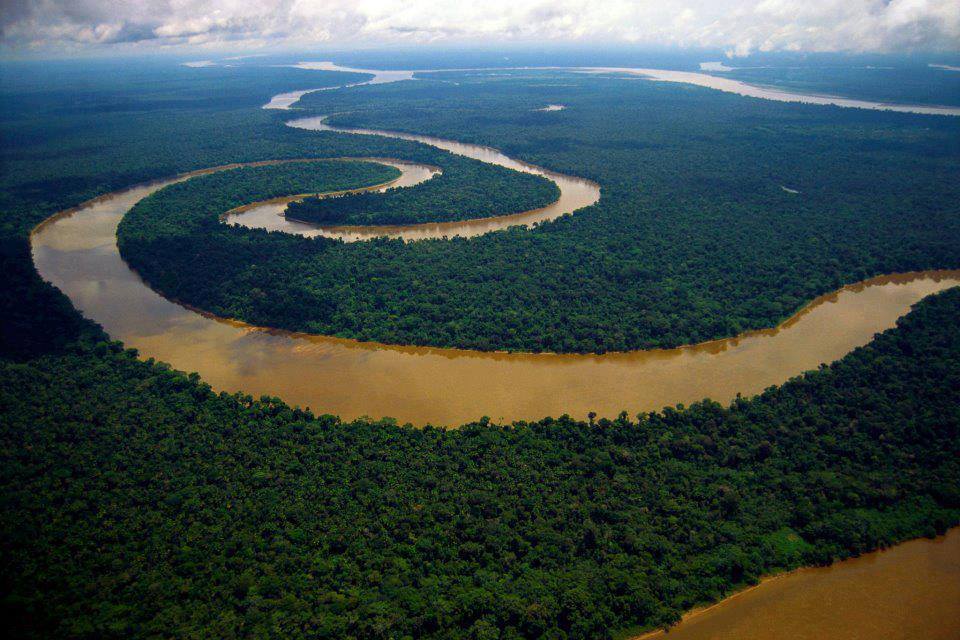
Fluid dynamics is a branch of science which is concerned with the study of the motion of fluid or that of bodies in contact with fluids. Fluids are classified as liquids and gases. It is well known that matter is made up of molecules or atoms which are always in a state of random motion. In fluid dynamics, the study of individual molecules is neither necessary nor appropriate from the point of view of the use of mathematical methods. Hence, we consider the macroscopic (bulk) behavior of fluid by supposing the fluid to be continuously distributed in a given space. The assumption is known as the continuum hypothesis. This continuum concept of matter allows us to subdivide a fluid element independently. Furthermore, we define a fluid particle as the fluid contained within the physically infinitesimal volume.
- Teacher: Eshetu Haile
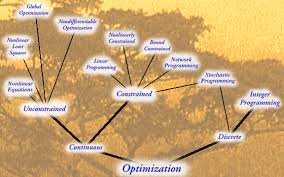
In mathematics, nonlinear programming/Optimization (NLP) is the process of solving an optimization problem where some of the constraints or the objective function are nonlinear. An optimization problem is one of calculation of the extrema (maxima, minima or stationary points) of an objective function over a set of unknown real variables and conditional to the satisfaction of a system of equalities and inequalities, collectively termed constraints. It is the sub-field of mathematical optimization that deals with problems that are not linear.
- Teacher: Getnet Worku


This is exit exam for Bsc Mathematics Graduating class students.
- Teacher: Mathematics Dept
- Teacher: Getachew Mehabie
- Teacher: Daniel Meknonnen
- Teacher: Tarekegn Mitiku
- Teacher: Yibeltal Negussie
The course aims at
providing a concise mathematical formulation of characteristic problems of real
life with emphasis on quantitative aspects of the problems. It develops the
basic concepts and methods in modeling focusing on forecasting relevant
solutions to specified area problems. This course covers basic concepts and
methods in modeling, dimensional analysis, graphical methods and applications,
approximation and testing, applications (growth and decay models, population growth model,
interacting species, traffic flow, diffusion and population models, etc).
- Teacher: Dawit Melese