
- Teacher: Meseret L
This course prepares students to understand one of the practical aspects of physics and materials science. It is aimed to equip the students with the knowledge of the technologies in the field of electronic devices.
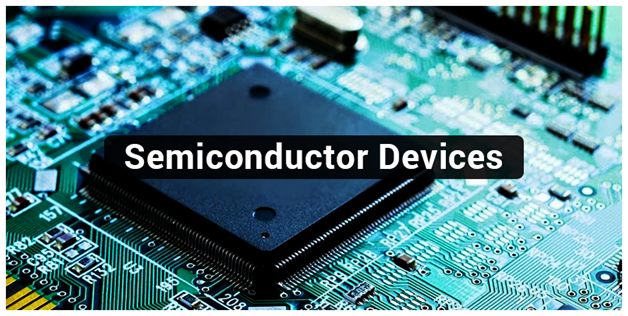
This course covers two parts: SEMICONDUCTOR PHYSICS (Energy Bands & Carrier Concentration in Thermal Equilibrium; Carrier Transport Phenomena) and SEMICONDUCTOR DEVICES (P-n Junction; Bipolar Transistor & Related Devices; MOSFET & related devices; Microwave Diodes, Quantum-Effect, & Hot-Electron Devices; Photonic devices)
- Teacher: Gajanan A
-Maxwell equations with source and without a source will be solved,
-wave propagation in different media and wave guides will also be studied
- Teacher: Getachew T
- Teacher: Moges T
Computational physics
is the study
of scientific problems
using computational methods; it
combines computer science, physics and applied mathematics to
develop scientific solutions
to complex problems. While the very nature of physics is to express relationships
between physical quantities in mathematical terms, an analytic solution of the resulting formula is often not available. Instead, numerical solutions based
on computer programs are required to obtain concrete results for real problems.
Computation has led to important conceptual advances and new ways of thinking
about physical systems. Computation can also allow students to explore models
in a way not possible using the analytical tools available to students.
- Teacher: Andargie G

The course will explain the nature – the why, the how – of entrepreneurship with particular reference to Physicists. Students will learn introductory ideas on the nature of entrepreneurship and the environment we now all face, Intellectual Property, entrepreneurial finance, marketing, pre-business feasibility analysis and opportunity assessment, getting started, and exit strategies. In addition, students will gain organizational skills for building an effective (typically cross-disciplinary) team and on business-plan fundamentals.
Course objectives:
- Understand entrepreneurship: the entrepreneur and the entrepreneurial process;
- Understand the potential of
physicists and engineers to contribute as entrepreneurs;
- Identify the steps required to
research the potential for a new venture opportunity;
- Understand the concept of IP
generation and protection;
- Understand the steps involved in turning an invention into a product;
- Obtain sufficient financial literacy and knowledge to write a business plan;
- Identify the steps required in setting up a new venture;
- Learn the “soft skills” required for success in a business environment;
- Learn about the resources available to budding entrepreneurs.
Course outline and structure:
Week 1: a) physicists and engineers as entrepreneurs, b) learning some “soft skills”
Week 2: the world of business
Week 3: intellectual property (IP)
Week 4: IP generation and recording (preliminary course feedback from students)
Week 5: the basics of patenting
Week 6: IP management and global IP protection (USPTO, WIPO, EPO, JPO)
Week 7: from invention to product: the timeline and processes
Week 8: business-plan fundamentals
Week 9: the financial aspects of running a small business
Week 10: marketing
Week 11: pre-business feasibility analysis and opportunity assessment
Week 12: practicing “soft skills”: your presentation
Week 13: getting started
Week 14: exit strategies
Course expectations :
1. Attendance policy
2. Active participation in class
3. Enthusiastic and equitable
participation in group projects
4. Ability to work together – team
spirit!
5. Good listening skills
6. Work out common times
7. Timely delivery
8. Conflict resolution
9. Submit ALL pieces of home
coursework.
Course evaluation methods:
1. Individual Assignment (x)%
2. Assignment (group) (x) %
3. Class participation & Attendance (x)%
4. Final project (Business Plan preparation) (30)%
5. Final Examination (40) %
- Teacher: Kassa D
This course is part of the elective courses for all physics major BSC students and is a compulsory course for BEd Students. The course comprises eight units with specific activity for each topic. for more information of the course you ca contact the course instructor via e mail: zinayet@bdu.edu.et

- Teacher: Zinaye Tefera